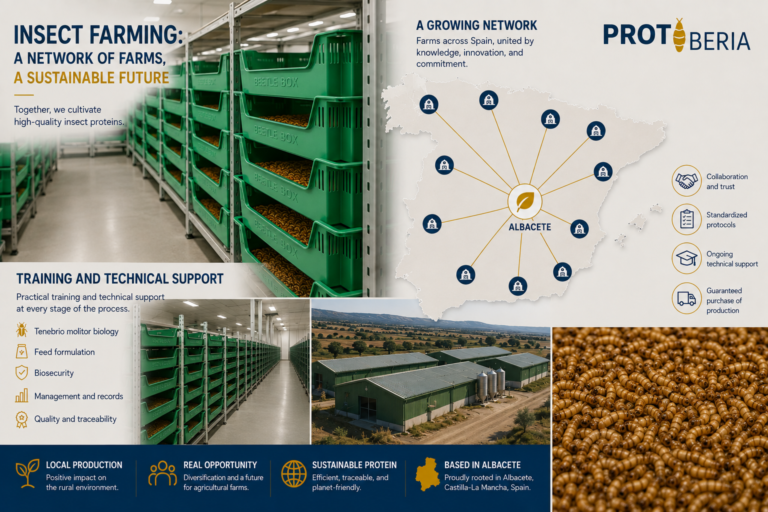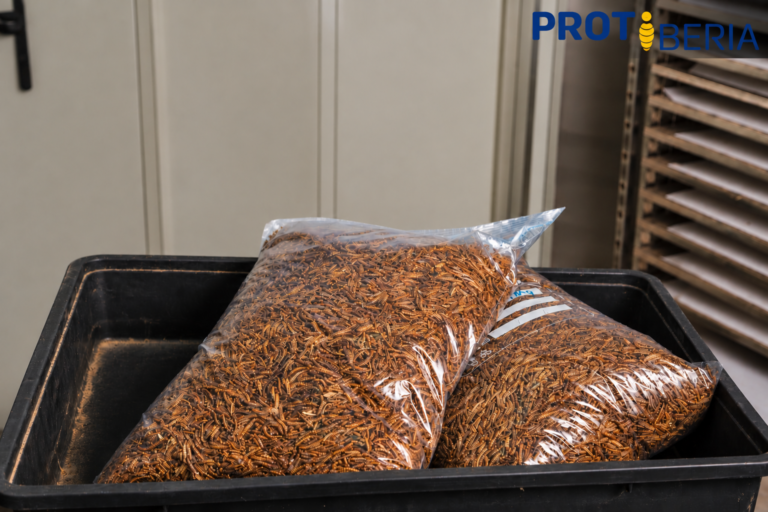
Tenebrio molitor is gradually being incorporated into animal feed, either as an alternative or functional ingredient. Recent research suggests that mealworm-based diets can influence a variety of immune parameters, such as immune markers (measurable biological signals that show how the immune system is functioning or reacting), antioxidant defences and immune-related gene expression, highlighting their potential in animal nutrition.
Introduction
Tenebrio molitor larvae, also known as yellow mealworm, are gradually being incorporated into the diets of a wide variety of animals intended for human consumption. Their use is supported by their nutritional properties, which make them a suitable and valuable ingredient for improving animal nutrition and reducing dependence on conventional protein sources. However, the positive effects of mealworms go beyond their nutritional contribution as recent research is exploring these effects on animal health with a focus on the immune system.
A well-functioning immune system helps animals respond to external challenges, maintains physiological balance and protects their health during their development. For this reason, the use of feed ingredients that can improve or modulate immune responses is becoming more relevant for livestock and aquaculture industries.
The functional properties of Tenebrio molitor
An interesting aspect of insect-based diets is that their value is not exclusively dependent on their nutritional profile, such as protein and lipid content, as insects also contain other compounds that may have biological activity. Chitin, for example isa structural component of the insect exoskeleton that has attracted attention because of its potential immunomodulatory properties. Similarly, insect-derived bioactive compounds, including antimicrobial peptides (AMPs), are being investigated for their biological functions.
Aquaculture applications:
Immune response in Persian sturgeon
A recent study (Safari et al., 2026) involving juvenile Persian sturgeon (Acipenser persicus) shows an interesting example of the potential immunological effects of T. molitor. Researchers investigated the effects of partially replacing fishmeal protein with yellow mealworm meal using four dietary treatments: a control diet and three experimental diets in which 5%, 10% and 20% of fishmeal protein were replaced with mealworm meal.
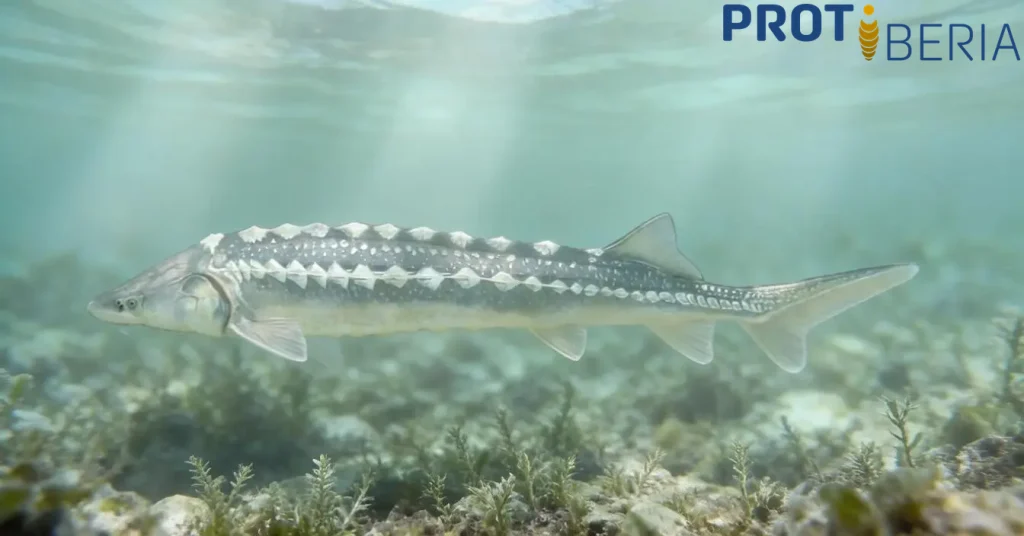
Results revealed changes in immune-related parameters: mealworm-based diets showed significantly higher serum and mucus lysozyme activity (an important component of innate immunity) and increased serum immunoglobulin M (IgM), which plays a role in in the animal’s humoral immune response.
At the molecular level, the gene expression of interleukin-1 beta (IL-1β), an immune-related gene involved in inflammatory signalling, also increased. Furthermore, the 20% replacement group achieved the highest weight gain.
These findings suggest that partial replacement of fishmeal diets with T. molitor influence several components of the immune response in juvenile Persian sturgeon.
Immune response in shrimp: the case of Litopenaeus vannamei
The functional properties of mealworm-based diets are not limited to fish. A recent study (Zheng et al., 2026) evaluated the replacement of fishmeal protein with T. molitor at 0%, 15%, 30% and 45% in diets for juvenile shrimp feeding.
The findings revealed positive changes in innate immunity: phenoloxidase and lysozyme activities increased with dietary mealworm inclusion (both participate in important natural defence mechanisms in crustaceans).
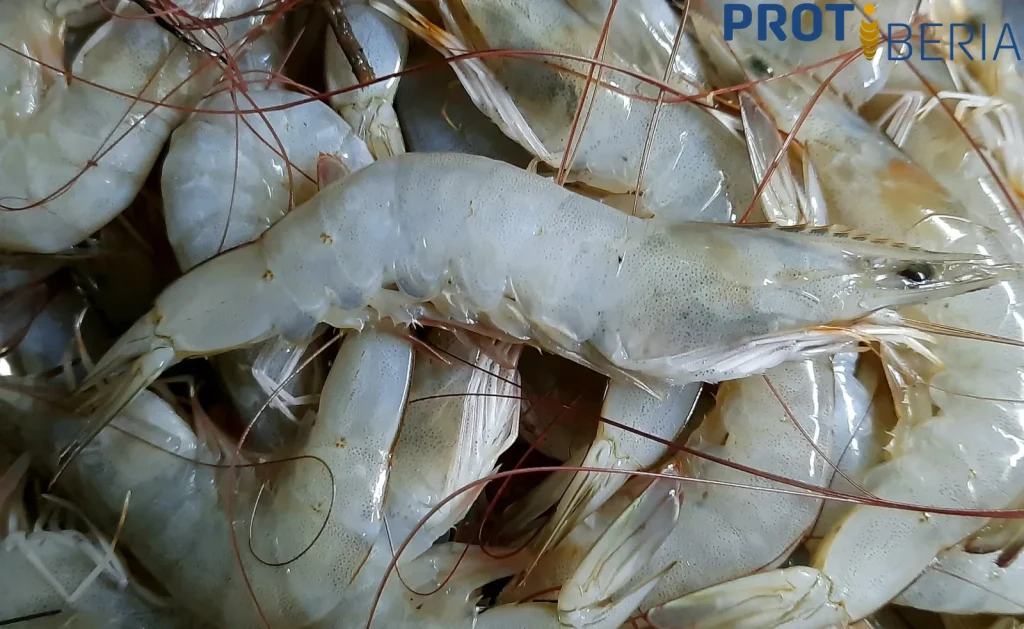
They also identified changes in the expression of genes involved in immune signalling pathways, such as Toll/IMD and JAK-STAT, and in antimicrobial peptide-related genes, including cru and alf.
Nevertheless, the highest inclusion level was not necessarily the one with the best results: the 30% diet achieved the greatest improvement in growth performance (12,34% increase in weight gain rate). This highlights the importance of designing balanced diets with proper inclusion levels.
Research in poultry: what does it tell us
These positive effects of insect-based diets have also been investigated in terrestrial livestock, particularly in broiler chickens.
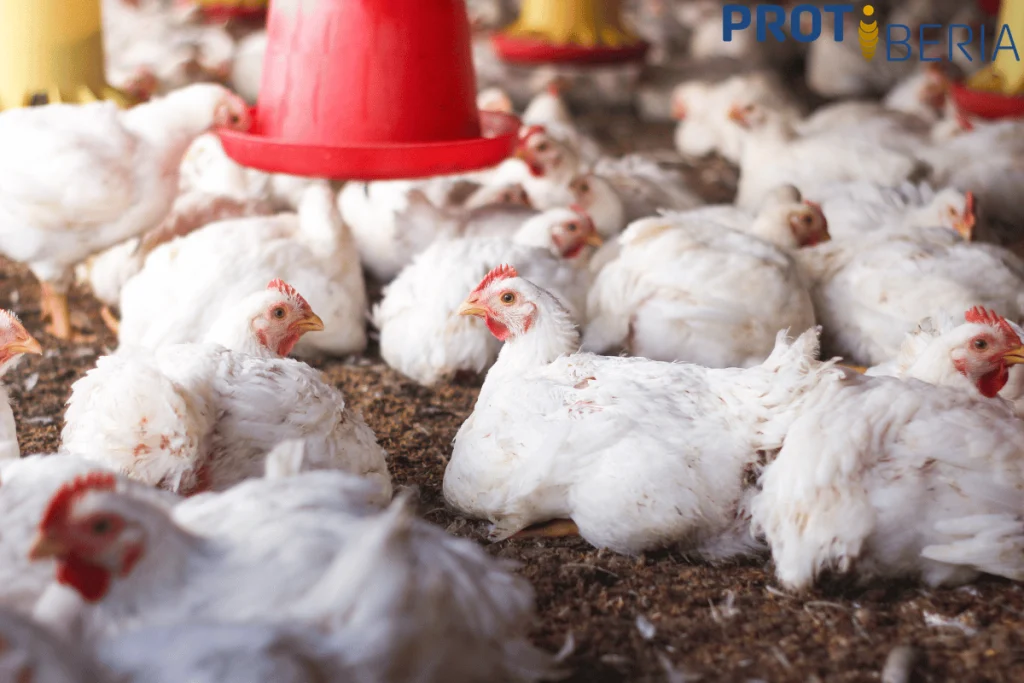
A study by Benzertiha et al. (2020) evaluated the effects of full-fat T. molitor and Zophobas morio (a close relative of T. molitor) meals on growth performance, blood parameters and selected immune system traits in broiler chickens.
The results concerning the immune system were particularly interesting: groups receiving insect meals showed lower serum IgY and IgM concentrations than the negative control.
These findings indicate that insect-based diets can modify selected immune system parameters, although this change is not always an increase in every marker. Moreover, we need to take into consideration that this study used two insect species for the feed, meaning that its results should not be attributed exclusively to T. molitor.
Final reflection
The use of Tenebrio molitor in animal feed represents an opportunity for its future applications. Its nutritional composition, together with potential effects on animal immunity make it a valuable and promising alternative to conventional feed ingredients.
From livestock to aquaculture, scientific evidence is beginning to show that mealworm-based diets can influence specific immune-related responses. However, these effects are not universal and must be understood in relation to species, formulation and inclusion level.
Ultimately, the future of T. molitor in animal nutrition may lie not only in its ability to provide high-quality nutrients, but also in its potential to contribute to animal health and the development of new functional feed formulations.
References
Benzertiha, A., Kierończyk, B., Kołodziejski, P., Pruszyńska–Oszmałek, E., Rawski, M., Józefiak, D., & Józefiak, A. (2020). Tenebrio molitor and Zophobas morio full-fat meals as functional feed additives affect broiler chickens’ growth performance and immune system traits. Poultry science, 99(1), 196-206.https://www.sciencedirect.com/science/article/pii/S0032579119578646
Safari, R., Pourkazemi, M., Azadi, H., Mortezaei, F., Bagheri, T., Pakzad, M., … & Toghdory, A. (2026). Yellow Mealworm (Tenebrio molitor) as a Fishmeal Substitute Improves Immunity and Molecular Responses in Juvenile Persian Sturgeon (Acipenser persicus). Veterinary and Animal Science, 100931.https://www.researchgate.net/publication/417469316_Yellow_Mealworm_Tenebrio_molitor_as_a_Fishmeal_Substitute_Improves_Immunity_and_Molecular_Responses_in_Juvenile_Persian_Sturgeon_Acipenser_persicus
Zheng, Y. D., Chen, J., Wang, H. M., Hou, C. H., Yuan, H., Hu, N. J., & Zhang, S. (2026). REPLACEMENT OF FISH MEAL WITH TENEBRIO MOLITOR MEAL ON GROWTH PERFORMANCE, IMMUNE RESPONSE, AND NUTRITIONAL QUALITY OF LITOPENAEUS VANNAMEI. Acta Hydrobiologica Sinica, 50(8), 082607-72.https://www.researchgate.net/publication/410687325_REPLACEMENT_OF_FISH_MEAL_WITH_TENEBRIO_MOLITOR_MEAL_ON_GROWTH_PERFORMANCE_IMMUNE_RESPONSE_AND_NUTRITIONAL_QUALITY_OF_LITOPENAEUS_VANNAMEI