Tenebrio molitor frass is attracting growing interest as a resource for more sustainable agriculture. A study published in 2026 analyzes, for the first time, the effect of frass from larvae fed on bran and polyurethane foam on the growth and volatile emissions of the daisy Bellis perennis.
Introduction: from Mealworm to Circular Economy
Tenebrio molitor, commonly known as the mealworm, has become one of the insects with the greatest potential for developing new sustainable sources of protein. Its significance extends beyond the production of ingredients for animal or human consumption: insect farming also generates byproducts that may have applications in other sectors.
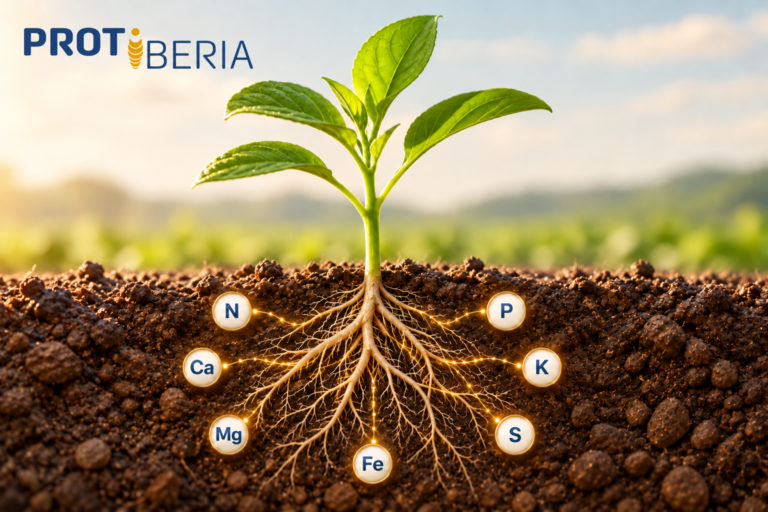
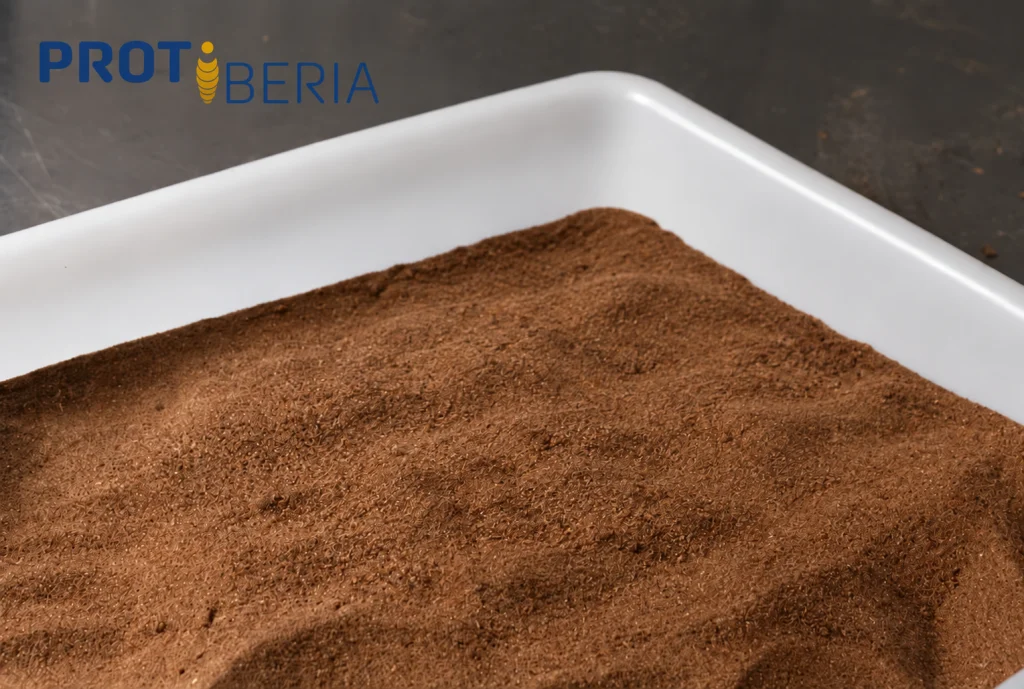
One of these is frass, a term used primarily to refer to the excreta of insects and other materials associated with the rearing process. Its composition includes organic matter and nutrients such as nitrogen, phosphorus and potassium. Furthermore, previous research has indicated the presence of microorganisms, which is why research is being conducted into its use as a fertilizer and biostimulant.
In this context, a new study published in 2026 in Agricultural Science and Technology examines a particularly interesting question: Can the type of feed given to Tenebrio molitor alter the characteristics of the frass and, as a result, its effect on plants?
A 2026 Study examines a new type of frass
The study conducted by researchers at CEBAS-CSIC and the University of Sevilla examined the effect of two types of frass from Tenebrio molitor larvae:
- Frass-Bran: obtained from larvae fed by bran.
- Frass-PU: obtained from larvae fed by polyurethane foam.
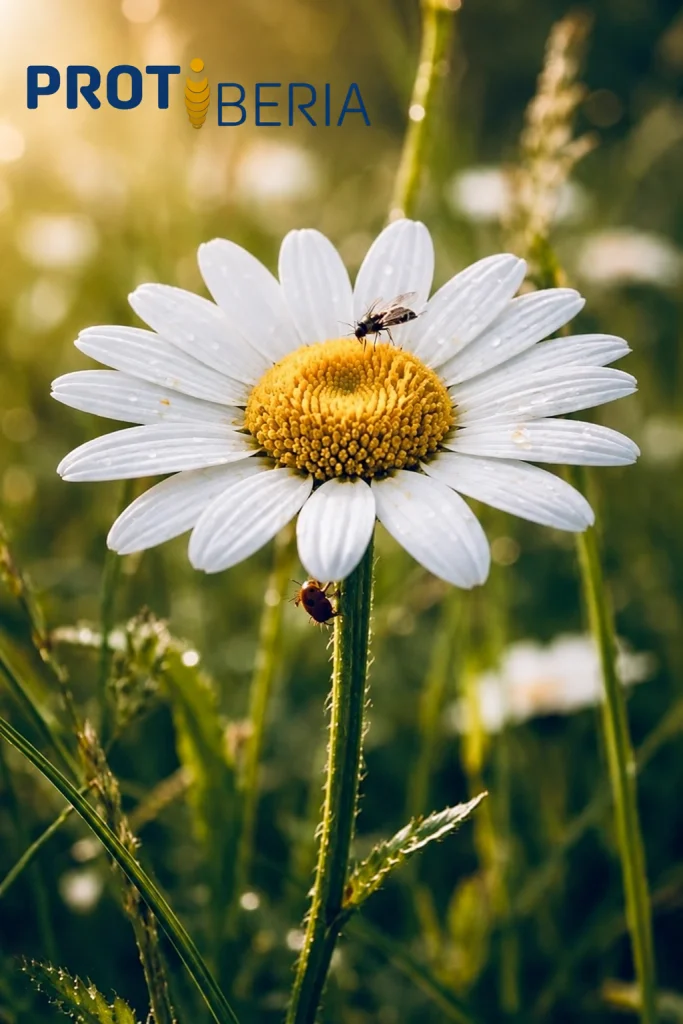
The researchers used these materials to grow Bellis perennis, commonly known as the common daisy, and compared them with a conventional mineral fertilizer.
It is important to note that this is an experimental study. The use of polyurethane as larval feed should not be interpreted as a general recommendation for Tenebrio rearing, but rather as specific research into the ability of these insects to metabolize certain polymers and into the characteristics of the resulting frass.
One of the most interesting findings of the study was that the composition of the frass varied depending on the larvae’s diet. The frass from larvae fed polyurethane had higher concentrations of nitrogen and calcium, while the frass from bran contained higher amounts of phosphorus, potassium, magnesium, copper, iron and manganese.
These results highlight a fundamental issue for frass production: the insect’s diet can directly influence the characteristics of the frass obtained. Therefore, the formulation of the larvae’s diet not only determines their growth and composition but may also be relevant when defining the characteristics of the byproducts obtained during rearing.
What effect did the frass have on the plants?
The researchers observed that there were no significant differences in the fresh or dry weight of the plants between the frass treatments and the mineral fertilizer after 14 weeks. However, they did find interesting differences in flower production. The number of flowers increased during the experiment in plants treated with both types of frass. The most notable result was observed with frass from larvae fed polyurethane.
At 14 weeks, the average number of flowers per plant was approximately:
1. Frass-PU: 7.33 flowers.
2. Frass-Bran: 5.75 flowers.
3. Mineral fertilizer: 1.53 flowers.
These data suggest that frass may influence not only nutrient supply, but also certain processes related to plant development. However, the authors themselves note that further research is still needed into the mechanisms responsible for these effects.
Frass can also alter the volatile compounds in flowers
One of the most innovative aspects of the research was the analysis of the volatile organic compounds (VOCs) emitted by the flowers. VOCs are molecules that play a role in various plant processes and may be related to the plant’s aroma, its interaction with pollinators and certain defense mechanisms.
The study identified 39 volatile compounds in the flowers of Bellis perennis. The composition of these compounds differed depending on whether the plants had received frass, frass derived from polyurethane or mineral fertilizer.
In particular, statistical analysis allowed for a clear differentiation between the three treatments. Some compounds associated with plants fertilized with frass are related to plant aromas and, in some cases, exhibit properties that have been studied for their potential antimicrobial activity. This opens up an interesting line of research: insect frass could influence not only nutrient availability but also certain metabolic responses in plants.
An Example of Circular Economy
The significance of this study extends beyond agriculture. It serves as an example of how insect farming can be integrated into circular bioeconomy models.
The concept involves utilizing various resources and byproducts to create new applications, while reducing dependence on conventional raw materials and resources. In the case of Tenebrio molitor, there are various ways to utilize the insect:
• Larvae: ingredients rich in proteins and lipids for various applications.
• Tenebrio meal: an ingredient for animal feed and other applications.
• Insect oil: a source of lipids with potential for various sectors.
• Frass: a byproduct with potential for agricultural applications.
• Chitin and other components: raw materials of interest for future biotechnological applications.
What does this study tell us about the future?
The study published in 2026 shows that there are still many possibilities to explore regarding Tenebrio molitor frass. One of the most important aspects is that not all frass are necessarily the same. Its composition can depend on factors such as:
• The insect species.
• The diet used during rearing.
• Production conditions.
• The collection and processing methods.
• The final composition of the product.
Therefore, moving toward standardized frass products requires continued research into their composition, safety, stability and agronomic performance in different crops. The authors also note that research on the agricultural use of insect frass is still in a relatively early stage compared to traditional organic fertilizers and soil amendments.
Final reflection: turning a byproduct into a resource
Research on Tenebrio molitor frass highlights one of the great opportunities offered by insect farming: transforming what was previously considered a byproduct into a new source of value. This 2026 study is particularly interesting because it demonstrates that frass can have different effects depending on the larvae’s diet and that its effects may extend beyond simply providing nutrients.
Much research remains to be done before these results can be extrapolated to other crops or agricultural systems. However, the findings reinforce a fundamental idea: the future of insect farming lies not only in producing protein, but in fully utilizing all the resources generated during the process.
At Protiberia, we are committed to this model of comprehensive utilization of Tenebrio molitor, where innovation, research, and the circular economy enable the discovery of new applications for each of the insect-derived products.
References
– Amorim, H. C., Ashworth, A. J., Arsi, K., Rojas, M. G., Morales-Ramos, J. A., Donoghue, A., & Robinson, K. (2024). Insect frass composition and potential use as an organic fertilizer in circular economies. Journal of Economic Entomology, 117(4), 1261-1268.DOI: 10.1093/jee/toad234.
– Ros, M.; Lidon, P.; Hernandez-Lara, A.; Orts, J. M.; Pascual, J. A. (2026). Frass from Tenebrio Molitor fed with polyurethane foams used as fertilizer determines the volatile organic compounds of Bellis perennis flowers. Agricultural Science and Technology, 18(1), 91–103. DOI: 10.15547/ast.2026.01.010.