Category 3 Animal by products (ABPs) can be used as valuable raw materials for the
manufacture of pet food. Their proper management and processing allow these
materials to be recovered while ensuring safety, traceability and compliance with
applicable regulatory requirements. Among these, dehydrated Tenebrio molitor
larvae, represent an innovative alternative within the pet food sector.
What Are Category 3 ABPs?
ABPs are materials of animal origin that are not intended for human consumption and are regulated according to their potential risks. Category 3 materials are considered the lowest-risk category and, under specific conditions, can be processed and recovered for use in animal feed, including pet food.
These materials may include certain by-products obtained from animals slaughtered for human consumption, parts that are ultimately not intended for human consumption for commercial reasons, and other products of animal origin covered by the legislation.
It is important to note that not all Category 3 ABPs can be used in the same way. Their potential use depends on the nature and origin of the material, the treatment applied and the intended end use.
The management of these materials is mainly regulated by Regulation (EC) No
1069/2009 and Commission Regulation (EU) No 142/2011, which establish the health
requirements for their collection, transport, processing and use.
From By-Product to Pet Food Ingredient
One of the main benefits of Category 3 ABPs is the possibility of transforming certain animal by-products into new raw materials, provided that they meet the regulatory requirements and undergo authorised and controlled processes. The treatments applied must also ensure that the resulting product is safe and stable.
The valorisation process may include different stages:
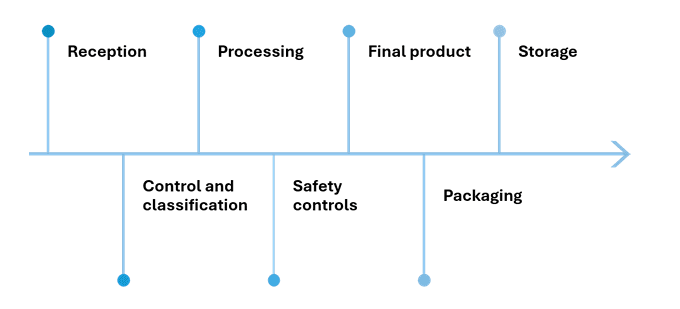
The valorisation of Category 3 ABPs makes it possible to reincorporate certain animal derived resources into the production chain, promoting the principles of the circular economy, reducing waste and developing new alternatives for safer, more innovative, and more sustainable pet food.
The Role of Insects: Dehydrated Tenebrio molitor Larvae
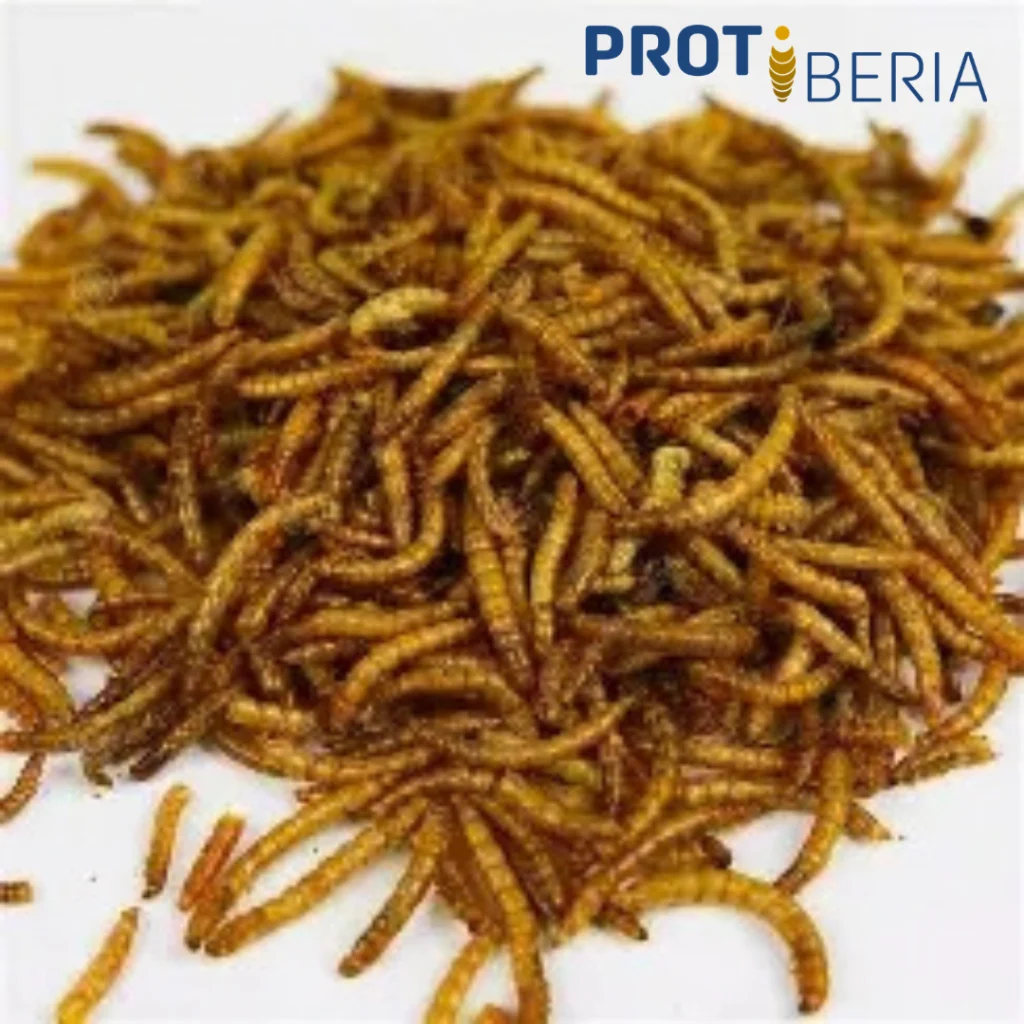
Within the development of new ingredients for animal nutrition, Tenebrio molitor is gaining interest as a source of protein and other nutrients. Tenebrio molitor larvae have a nutritional profile of approximately 55% protein, 16% fat, 10% carbohydrates and 14% fibre, making them an interesting ingredient for animal nutrition and pet food applications.
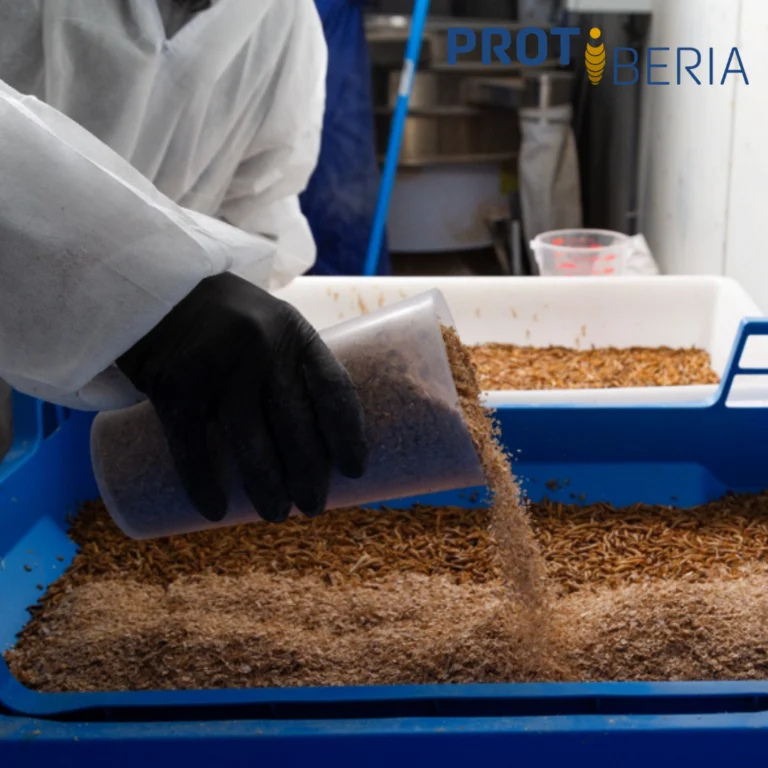
Our dehydrated larvae are obtained through a controlled drying process designed to reduce moisture and improve the product’s stability, shelf life and ease of storage and handling. The resulting format makes the larvae easier to transport, store and incorporate into different formulations.
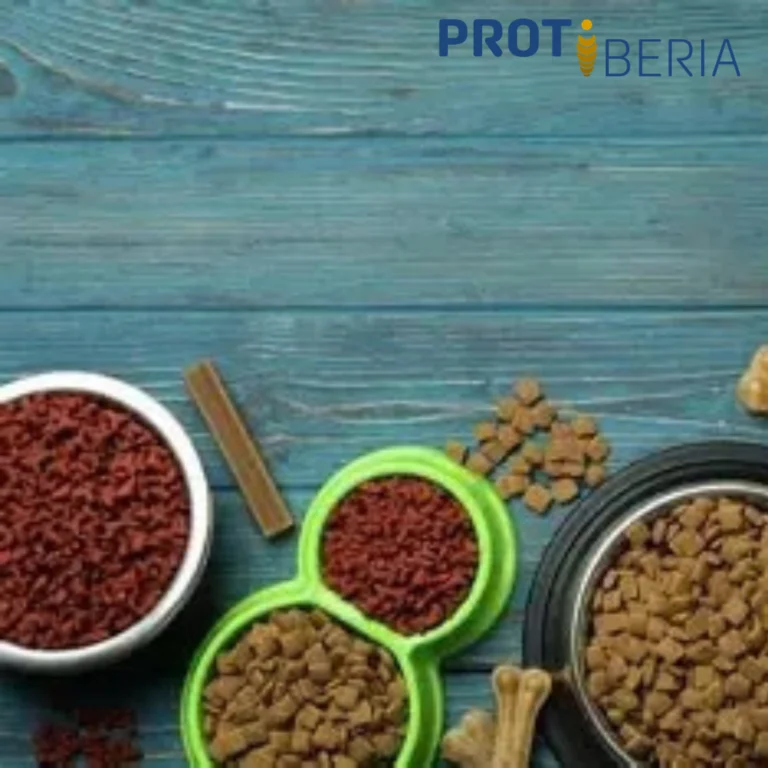
For the pet food sector, dehydrated Tenebrio molitor larvae offer manufacturers an alternative insect-based ingredient for the development of innovative products. Their nutritional profile and practical format make them suitable for exploring new formulations and applications within animal nutrition.
At Protiberia, we develop our dehydration process with the characteristics of the final product and its intended application in mind, controlling the process to obtain a consistent and stable ingredient from batch to batch.
Safety and Traceability: Key Elements in the Process
Ensuring the safety of dehydrated Tenebrio molitor larvae requires control throughout the entire production process, from raw material reception to final storage. Each stage is managed under defined hygiene and process conditions to minimise the risk of contamination and ensure product conformity.
The HACCP system provides the framework for identifying and controlling potential microbiological, physical and chemical hazards. Depending on the processing stage, controls include:
- Condition of the raw material
- Hygiene of equipment and working areas
- Dehydration parameters, such as time, temperature and final moisture content.
- Foreign-body control
- Packaging conditions, help prevent recontamination before the product reaches
storage.
Traceability ensures that each batch can be followed throughout the production chain, linking the raw material, processing records, quality controls, packaging and final destination. This provides the information needed to monitor each batch and support effective quality management.
Through this approach, Protiberia combines process control, HACCP, hygiene and traceability to produce dehydrated Tenebrio molitor larvae with consistent characteristics and controlled conditions for their intended use in animal nutrition.
Conclusion
Category 3 ABPs represent an opportunity to valorise certain animal by-products and transform them, through controlled processes, into new raw materials for different applications, including pet food.
The combination of circular economy, innovation, safety and traceability is essential to advancing towards a more efficient and sustainable pet food sector. In this context, the development of new solutions, such as the processing and dehydration of Tenebrio molitor, opens up new possibilities for producing ingredients and products adapted to the evolving needs of animal nutrition.
References
European Commission. (2009). Regulation (EC) No 1069/2009 of the European Parliament and of the Council of 21 October 2009 laying down health rules as regards animal by-products and derived products not intended for human
consumption and repealing Regulation (EC) No 1774/2002. EUR-Lex. https://eur-lex.europa.eu/eli/reg/2011/142/oj/eng
European Commission. (n.d.). Animal by-products.
https://food.ec.europa.eu/food-safety/animal-products_en
European Commission. (n.d.). Animal feed. https://food.ec.europa.eu/food-safety/animal-products_en
European Commission. (n.d.). Animal feed. Animal feed – Food Safety – European Commission