| As the industry seeks more sustainable and circular alternatives, the question arises:can we feed Tenebrio molitor with by-products that are not currently authorized forlivestock? A recent study has thoroughly analysed the safety and performance of T.molitor raised on manure, municipal waste, and Category 2 meat and bone meal. Theresults reveal great potential but also challenges regarding contaminants and foodsafety. |
The use of organic byproducts for insect rearing is one of the great promises of the circular economy. In the European Union, the mealworm (Tenebrio molitor) is already authorized for use as a food source for pets, birds, and pigs, and its use in human food is progressing rapidly. However, the substrate they are permitted to consume remains highly restricted, limited mainly to materials of plant origin.
Currently, European legislation limits the substrates permitted for rearing insects intended for food. However, there are numerous potentially valuable organic wastes that are not yet authorized. In this context, Meijer et al. (2026) analyse the food safety of T. molitor larvae reared on unauthorized byproducts, assessing microbiological and chemical risks.
Biological Performance: Which Substrates Work Best?
One of the pillars of the industry is optimizing the final biomass. In the experiment, the larvae were fed six different diets to compare their survival and growth during the key development phase. The data reveal that not all byproducts are the same for T. molitor:
- Meat and bone meal (Category 2): showed excellent performance, equivalent to the standard cereal-based diet.
- Fertilizers from poultry farming: allowed for acceptable growth, although they pose other safety challenges.
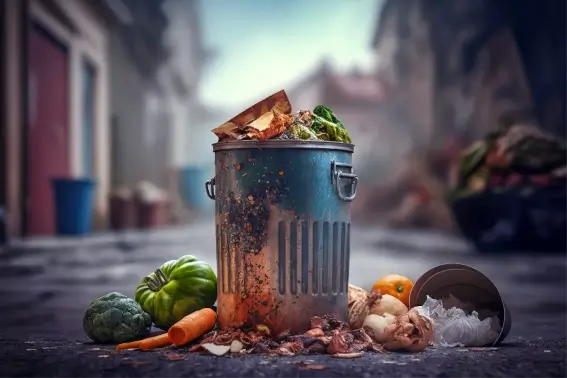
- Municipal waste and supermarket mixes: performed worse due to their high initial moisture content, requiring more complex handling and mixing with wheat bran to balance the diet.
Food safety: The challenge of contaminants
The main concern for European authorities (EFSA) is the transfer of hazardous substances from the substrate to the mealworm. The study analysed heavy metals, dioxins, pesticides, and microbiological pathogens, yielding very interesting results.
It was observed that T. molitor has the capacity to accumulate certain metals such as cadmium, selenium, and zinc. However, in most of the cases analysed, the final product remained below the legal limits permitted for animal feed in the European Union (Directive 2002/32/EC).
Residues of several pesticides (such as common agricultural fungicides like pyrimethanil and thiabendazole) were detected in the municipal waste and supermarket substrates. Furthermore, thiabendazole and nicotine (the latter found in the supermarket mix) were found, exceeding the default Maximum Residue Limits (MRLs) for insects. The presence of nicotine, likely due to improper handling, underscores the importance of strict control of raw materials.

Microbiological safety and drugs
Microbiological analysis revealed that poultry manure and municipal waste contained high bacterial loads, including spores of common environmental bacteria (like Bacillus cereus and Clostridium). These microorganisms are naturally present in the soil and agricultural environments; therefore, their presence underscores why our strict post-harvest sanitation and heat treatment processes are so vital to ensure a safe, premium product.
Although post-harvest sanitation processes (such as cooking) can eliminate these pathogens, the study notes that certain bacterial spores are highly resilient. To address this, specialized heat treatments—such as multi-stage sterilization (tyndallisation)—ensure that the final nutrient source is completely safe and meets the highest food standards.
The most critical finding in this section was the presence of coccidiostats (monensin, narasin, and nicarbazin) in the fertilizer and, by transfer, in the mealworms. These treatments prevent coccidiosis, a common parasitic intestinal disease in poultry. Traces of these medicines can be excreted by the birds, potentially transferring from the manure to the protein source if the substrate is not strictly controlled.
This reinforces the idea that:
- Hygiene management is crucial.
- Substrate control is key.
- Final processing reduces risks.

Final reflection: Opportunities and barriers.
This pioneering study demonstrates that it is technically and biologically possible to cultivate Tenebrio molitor on complex byproducts, but safety must be the fundamental principle. The key for the industry will be to guarantee traceability and pre-treatment of materials to minimize risks.
The future of the sector will depend on:
- Applied research,
- Collaboration with regulatory authorities,
- And the implementation of robust control systems.
The circular economy must be not only sustainable, but also safe. And this work represents a decisive step in that direction. In the future, we will very likely see the development of specific and certified mixtures for Tenebrio molitor, making this practice an industry standard.
For now, it represents yet another tool that, when used knowledgeably, can be the key to unlocking the full potential of these small giants of sustainable protein.
At Protiberia we support R&D advancements to offer healthy, high-quality colonies, highlighting insect farming while creating synergies with other farms, presenting it as an alternative for human consumption.
If you are looking for a strategic partner to develop insect-based nutritional solutions, let’s talk. We create the synergies needed to transform the industry. Contact us today here
References
Meijer, N., Zadelhoff, K. van, Dame-Korevaar, M. A., Borghuis, A., Groenestijn, J. W. van, Boonstra, J., Brouwer, M., Brust, H., Lange, E. de, Leenders, L., Loeke, N. te, Luinenburg, X., Tienstra, M., Antonis, A. F. G., Appel, M., Bruins, M. E., Deen, S. N. E., Veldkamp, T., & Hil, E. F. H. den. (2026). Food and feed safety of Tenebrio molitor reared on yet to be legally authorised residual streams in the European Union. Journal of Insects as Food and Feed, 1(aop), 1-19. https://doi.org/10.1163/23524588-bja10373