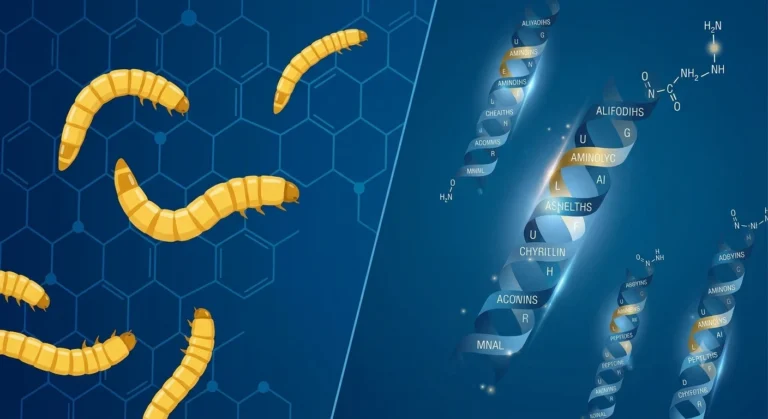
| This article explores how controlled enzymatic hydrolysis of Tenebrio molitor meal releases specific bioactive peptides with potent antimicrobial, antioxidant, and immunomodulatory properties, opening new premium alternatives for animal feed and biomedical applications. |
In the rapidly evolving insect farming sector, industrial processing has progressed far beyond merely producing bulk protein meals or basic fat extraction. Today, insect companies are pivoting toward molecular bioprospecting—specifically, the isolation and utilization of bioactive peptides.
During the standard automated fractionation of Tenebrio molitor larvae, specific cutting-edge thermomechanical and enzymatic processes alter the structural framework of complex proteins. Instead of traditional macro-nutritional delivery, these specialized workflows transform insect biomass into highly targeted functional compounds.
These micro-ingredients offer precision biological benefits that extend far beyond baseline survival requirements in livestock. As the global agricultural industry seeks sustainable alternatives to chemical growth promoters, understanding the biochemical transformation of yellow mealworms into high-tier bioactive fractions becomes essential for maximizing market value and industry standard innovation.
Unlocking Peptides Through Enzymatic Hydrolysis
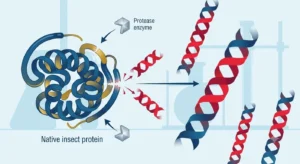
Bioactive peptides are short, highly active chains of amino acids (typically spanning from 2 to 20 units) that remain completely encrypted and inert while trapped within the intact native protein molecule.
To unlock their immense functional potential, the Tenebrio molitor biomass must undergo controlled enzymatic hydrolysis. This is an advanced, highly technical process where specific food-grade proteases (such as Alcalase, Flavourzyme, or Esperase) break down peptide bonds at precise temperature, time, and pH thresholds.
The resulting hydrolysates possess specific molecular weights that dictate their biological destination. Achieving the perfect balance in the degree of hydrolysis is crucial; over-processing reduces the chains to mere free amino acids, stripping away their bioactive potential, while under-processing fails to liberate the encrypted sequences altogether.
Key Functional Properties of Tenebrio Peptides
Tenebrio peptides show several quite interesting and potentially marketable properties:
- Antimicrobial Activity: These molecules (AMPs) interact directly with the lipid bilayers of opportunistic pathogens, disrupting the cell membranes of bacteria like Salmonella spp. or Escherichia coli, making them an excellent natural alternative to synthetic antibiotics in early-stage animal feed.
- Antioxidant Capacity: Hydrolysis uncovers specific hydrophobic amino acid residues, such as tyrosine and phenylalanine, which effectively donate electrons to neutralize free radicals. These peptides prevent lipid oxidation within commercial feed formulations, extending shelf life organically without chemical additives.
- Immunomodulatory Effects: Recent in vitro and in vivo trials indicate that low-molecular-weight peptides stimulate gut-associated lymphoid tissue (GALT). This direct stimulation boosts general mucosal immunity, reducing systemic inflammation in delicate species during high-stress production phases.
High-Value Applications
By applying advanced processing methods to Tenebrio molitor meals, producers can supply premium-grade ingredients to the international animal nutrition market. This is especially relevant for precision aquaculture and premium pet food sectors, where functional health claims allow manufacturers to command significant market premiums over commodity proteins.
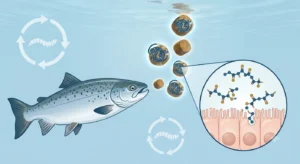
- Precision Aquaculture: Juvenile fish and shrimp have highly sensitive digestive tracts; the inclusion of pre-digested Tenebrio molitor peptides vastly improves nutrient absorption indexes, leading to lower feed conversion ratios (FCR) and significantly higher survival rates during pathogen outbreaks.
- Pet Food Specialization: Hypoallergenic pet treats formulated with insect hydrolysates drastically reduces adverse food reactions in dogs and cats, as the immune system does not recognize these low-molecular-weight peptides as potential allergens.
- Inmunostimulants and Vaccine Synergy: While research into commercial insect adjuvants is ongoing, real trials with insect-derived peptides, specifically from hydrolized silkworm (Bombyx mori) proteins, have proven to dramatically stimulate the expression of immune genes (like Relish and Defensin) in livestock. When integrated into animal’s health regime, these peptides act as powerful immunostimulants that work synergistically with vaccines, significantly accelerating antibody production and increasing resistance against bacterial challenges.
Technical Parameters for Industrial Processing
Scaling up the extraction of bioactive peptides requires rigorous engineering control within the processing plant. Insect farmers must manage distinct variables to guarantee batches with uniform bioactivity:
- Substrate Pre-treatment: Thermal or mechanical defatting of the larvae before hydrolysis increases the surface area exposure of proteins, optimizing enzyme efficiency.
- Enzyme-to-Substrate Ratio (E/S): Maintaining a strict E/S percentage prevents the over-cost of raw materials while ensuring the predictable release of targeted peptide chains.
- Ultrafiltration Membranes: Utilizing downstream molecular weight cut-off (MWCO) membranes isolates fractions below 3 kDa, which scientifically exhibit the highest antioxidant and antimicrobial capabilities.
Final Reflection
The production of yellow mealworm within the insect farming industry is transitioning from a volume-centric model into a precision biotechnology industry. Recognizing that the processing of Tenebrio molitor can generate high-value bioactive compounds, such as bioactive peptides allows the sector to move beyond price competition and step confidently into the arena of functional health solutions.
References
- Borrelli, L., Varriale, L., Dipineto, L., Pace, A., Menna, L. F., & Fioretti, A. (2021). Insect derived lauric acid as promising alternative strategy to antibiotics in the antimicrobial resistance scenario. Frontiers in Microbiology, 12, Artículo 620798. https://doi.org/10.3389/fmicb.2021.620798
- Hall, F., Johnson, P., & Liceaga, A. (2018). Effect of enzymatic hydrolysis on bioactive properties and allergenicity of cricket (Gryllodes sigillatus) protein. Food Chemistry, 262, 39–46. https://doi.org/10.1016/j.foodchem.2018.04.058
- Leni, G., Soetemans, L., Caligiani, A., Sforza, S., & Bastiaens, L. (2020). Degree of hydrolysis affects the techno-functional properties of lesser mealworm protein hydrolysates. Foods, 9(4), Artículo 381. https://doi.org/10.3390/foods9040381
- Tarahi, M., Aghababaei, F., McClements, D. J., Pignitter, M., & Hadidi, M. (2025). Bioactive peptides derived from insect proteins: Preparation, biological activities, potential applications, and safety issues. Food Chemistry, 465(Pt 1), Artículo 142113. https://doi.org/10.1016/j.foodchem.2024.142113