Summary
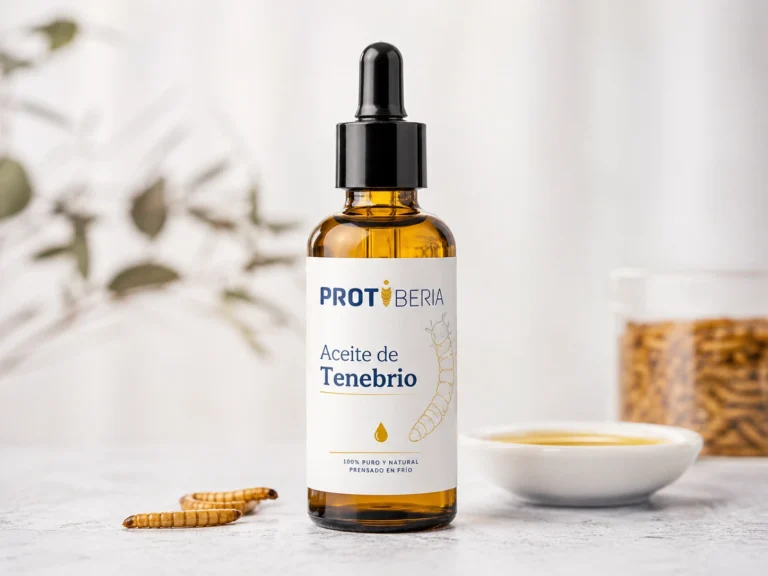
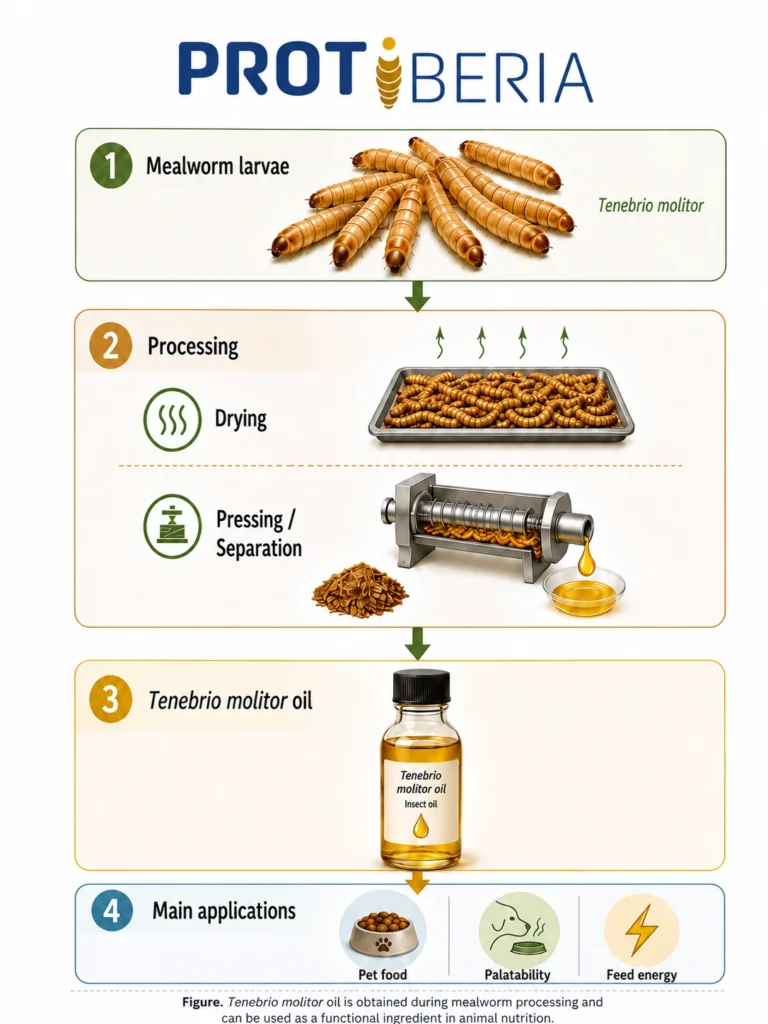
Tenebrio molitor oil is one of the ingredients obtained during mealworm processing. Although insect protein usually receives most of the attention, the lipid fraction also has practical value in animal nutrition. It can provide energy, support palatability and help make better use of the whole insect, especially in pet food and specialised feed formulations.
Introduction
When people talk about Tenebrio molitor in animal nutrition, protein is usually the first thing mentioned. That is understandable, as mealworm larvae are known for their protein content and their potential as an alternative ingredient in animal feed.
Still, Tenebrio is not only about protein. During processing, another useful fraction can be obtained: Tenebrio molitor oil. This oil comes from the fat naturally present in the larvae and can be used as a lipid ingredient in different feed applications.
For feed manufacturers and pet food companies, this is especially interesting because one raw material can generate more than one ingredient.
Beyond protein: the value of insect lipids
Insect farming is often linked to alternative protein production, but the process can go further. From the same larvae, it is possible to obtain protein meal, dehydrated larvae, chitin-rich fractions, frass and oil.
In animal nutrition, fats and oils have a very practical role. They increase the energy content of feed, improve texture, reduce dust and can help with pellet quality. They also influence aroma and palatability, which is especially relevant in pet food.
For this reason, Tenebrio molitor oil should not be treated as a simple by-product. If it is correctly processed and stored, it can become an ingredient with its own nutritional and technological interest.
How Tenebrio molitor oil is obtained
Tenebrio molitor oil is obtained from the fat naturally present in mealworm larvae. The exact process depends on the final product, but it usually includes drying, milling, pressing or separating the protein and lipid fractions.
A clear example is the production of defatted mealworm meal. In this process, part of the oil is separated from the solid fraction. As a result, two ingredients are obtained: a protein-rich meal and an insect oil that can be used in feed applications.
This separation is useful from an industrial point of view, as each fraction can be directed to the application where it makes the most sense.
Nutritional interest in animal feed
The main contribution of Tenebrio molitor oil is energy. Oils are commonly used in animal feed because fats provide more energy per gram than proteins or carbohydrates. This makes them useful in diets where energy concentration is important.
Its fatty acid profile also adds interest. Tenebrio molitor oil contains unsaturated fatty acids, including oleic and linoleic acids, which are also present in other oils used in animal nutrition.
This does not mean that Tenebrio molitor oil should replace every conventional oil. Its use will depend on the animal species, the type of feed, the inclusion level and the objective of the formulation.
Applications in pet food
Pet food is probably one of the most suitable markets for this ingredient. The sector is already used to working with novel ingredients, and there is growing interest in alternatives that combine nutritional value with a more efficient use of resources.
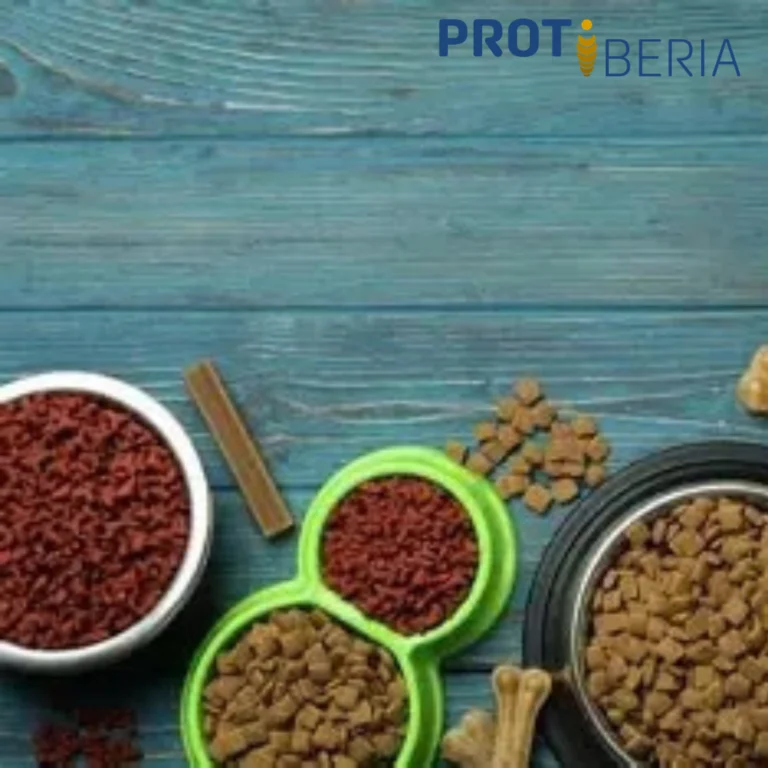
In dry pet food, oils are often applied after extrusion to coat the kibble. This improves aroma, texture and acceptance by the animal. In this context, insect oil may help support palatability while giving the product a more distinctive ingredient profile.
For pet food brands, Tenebrio molitor oil can also help differentiate products, especially when origin, sustainability and responsible production are part of the message.
Processing, quality and stability
As with any oil, quality depends not only on composition, but also on processing and storage. Tenebrio molitor oil can be affected by oxidation, temperature, light and contact with oxygen. If these factors are not controlled, the oil can lose quality over time.
For that reason, quality control is essential. Some relevant parameters are fatty acid profile, oxidative stability, moisture, impurities, sensory characteristics, microbiological safety and traceability.
Good processing practices make a clear difference. Proper drying of the larvae, controlled extraction, filtration, hygienic handling and suitable packaging all help obtain a stable ingredient for feed applications.
A sustainable ingredient for feed innovation
One of the strengths of Tenebrio molitor oil is that it helps make better use of insect biomass. The aim is not only to produce protein, but to valorise as much of the insect as possible.
This approach fits well with what the feed sector is looking for: more diversified raw materials, better use of resources and ingredients that respond to technical needs without ignoring sustainability.
For feed producers and pet food brands, Tenebrio molitor oil is a good example of how insect processing can create several useful ingredients from the same raw material.
Final reflection
Tenebrio molitor oil shows that the potential of insect farming goes beyond protein. With the right processing, mealworm larvae can be transformed into several ingredients for different markets.
In animal nutrition, this oil can provide energy, support palatability and contribute to more flexible feed formulations. Its use will always depend on quality, regulation and correct formulation, but its potential is clear.
In the end, insect processing is not about obtaining one single product. It is about using the whole biomass intelligently and turning each fraction into a practical solution for the feed sector.
References
- Syahrulawal, L. et al. Improving the nutritional values of yellow mealworm Tenebrio molitor larvae as an animal feed ingredient: a review. Journal of Animal Science and Biotechnology, 2023.
- Martínez-Pineda, M. et al. Exploring the Potential of Yellow Mealworm Tenebrio molitor Oil as a Nutraceutical Ingredient. Foods, 2024.
- Bosch, G. & Swanson, K. S. Effect of using insects as feed on animals: pet dogs and cats. Journal of Insects as Food and Feed, 2021.
- European Union. Commission Regulation EU 2021/1372.